
Research & Development
R&D POWERED BY Patient Need
Targeting the disease at the active site
We pursue challenging diseases with expert knowledge and multidisciplinary collaboration to help change how hereditary angioedema (HAE) and other rare diseases progress – and how a patient feels.
Areas of Focus
Hereditary Angioedema (HAE)
HAE is a potentially life-threatening rare disease caused by a genetic deficiency of a protein called C1 esterase inhibitor (C1-INH). C1-INH plays an important role in preventing the bradykinin-forming system from becoming hyperactive and mediating swelling in HAE. HAE is a rare condition, affecting between approximately 1 in 50,000 people.1 Left untreated, patients with HAE often have multiple attacks every month, and the swelling from each attack can last for 2 to 4 days.2
Clinical Trials
APeX-P (Active, Not Recruiting)
NCT05453968: This study is evaluating the pharmacokinetics (PK) and safety of berotralstat to determine the appropriate weight-based dose for pediatric participants 2 to < 12 years old for prophylactic treatment to prevent attacks of HAE. Learn more >>
APeX-A (Active, Enrolling by Invitation)
NCT04933721: This Phase 3b open-label study is providing access to berotralstat for patients with HAE who were previously enrolled in berotralstat studies. Learn more >>
ALPHA-ORBIT (Active, Not Recruiting)
NCT06842823: This is a Phase 3 multicenter, randomized, double-blind, placebo-controlled clinical trial evaluating the safety and efficacy of subcutaneous administration of navenibart in adult and adolescent participants with type 1 or type 2 hereditary angioedema (HAE). The goal of this clinical trial is to evaluate the efficacy and safety of navenibart compared to placebo in preventing HAE attacks in participants with HAE. Learn more >>
ORBIT-EXPANSE (Active, Enrolling By Invitation)
NCT07204938: This is a Phase 3 multicenter trial in 2 parts to evaluate the long-term safety and efficacy of navenibart in adult and adolescent participants with hereditary angioedema (HAE) who participated in STAR-0215-301 (NCT06842823; ALPHA-ORBIT). Learn more >>
ALPHA-SOLAR (Active, Not Recruiting)
NCT06007677: The goal of this trial is to enable the collection of information about long-term safety and clinical activity of navenibart (STAR-0215) in participants with hereditary angioedema (HAE). Participants will receive repeat doses of navenibart for up to 5 years. Learn more >>
Netherton Syndrome
Netherton syndrome is a serious, rare, lifelong genetic disorder affecting the skin, hair and immune system, caused by lack of normal function of a natural inhibitor of KLK5. People with Netherton syndrome often have red, scaly, inflamed skin, fragile hair, and are more likely to develop skin infections, allergies, asthma and eczema. Netherton syndrome can be life threatening, especially during infancy when patients are vulnerable to dehydration and recurrent infections.3 Currently, there are no approved treatments for Netherton syndrome.4
We are developing BCX17725, a potential best-in-class protein therapeutic that is designed to treat the underlying protein deficiency that causes Netherton syndrome by inhibiting KLK5, a serine protease in the skin that is unregulated in people with Netherton syndrome. Data from nonclinical studies have shown the potential for BCX17725 to achieve the potency, specificity and convenient dosing needed to treat patients with Netherton syndrome. Initial results from a Phase 1 clinical trial evaluating BCX17725 are expected in 2025.
Clinical Trials
Phase 1 study evaluating BCX17725 (Active, Recruiting)
NCT06539507: This is a first-in-human, Phase 1/1b, 4-part study that includes the evaluation of safety, tolerability, pharmacokinetics (PK), and immunogenicity of BCX17725. Learn more >>
Complement-mediated diseases
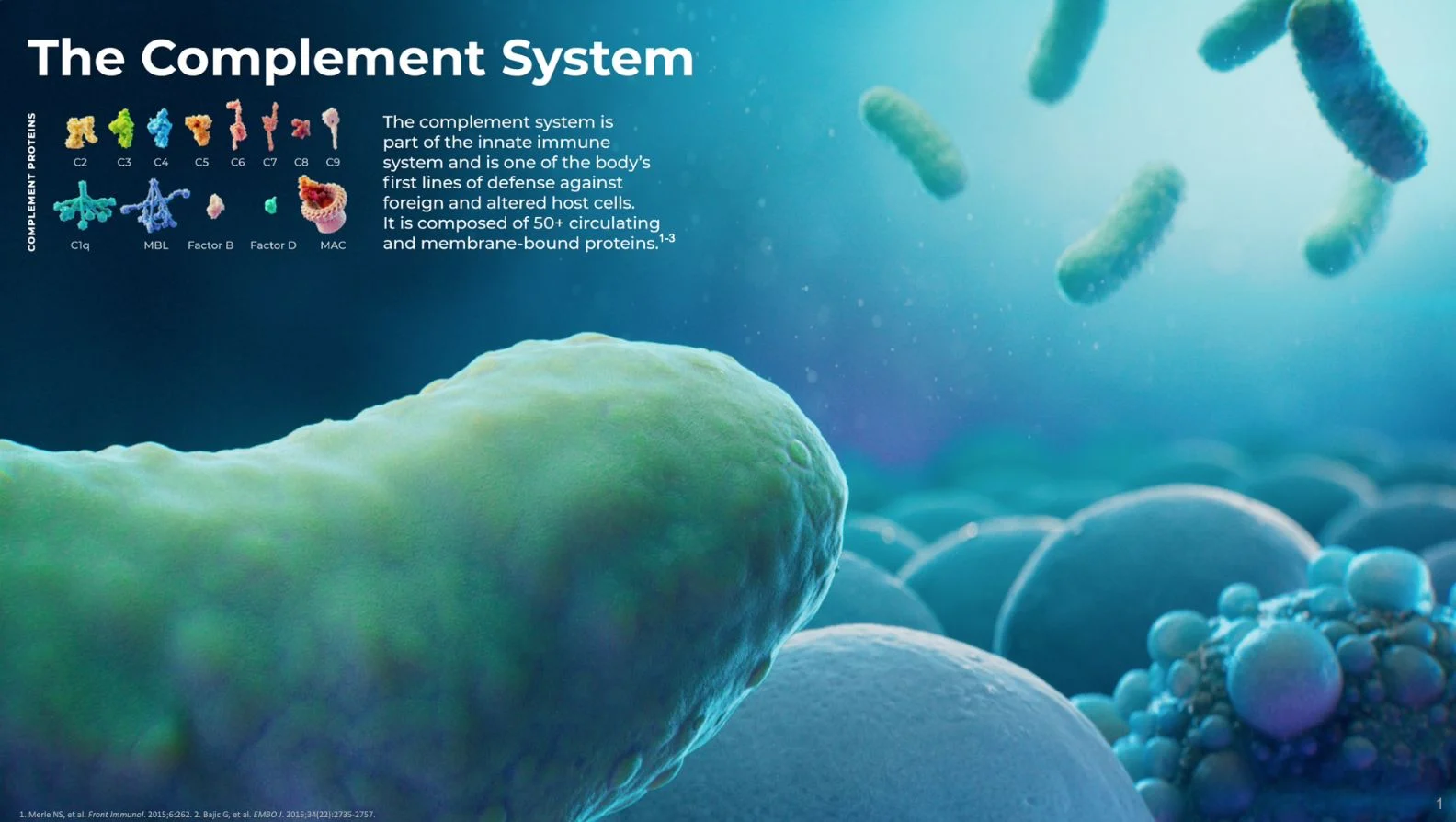
The complement system is part of the body’s natural immune system and is responsible for helping the body eliminate microbes and damaged cells. It is composed of proteins that are primarily produced in the liver and circulate in the blood. Once activated, the complement system stimulates inflammation, phagocytosis and cell lysis. Excessive or uncontrolled activation of the complement system can cause severe, and potentially fatal, immune and inflammatory disorders.
A growing pipeline of therapies for HAE and other rare diseases
BioCryst development programs represent the potential to improve the well-being of people whose lives are currently limited by rare diseases. We develop novel, oral, small-molecule medicines and injectable protein therapeutics that treat diseases in which significant unmet medical needs exist. An enzyme plays a key role in the biological pathway of the disease. Discover more >>
References
- Christiansen SC, Wilmot J, Castaldo AJ, Zuraw BL. The US Hereditary Angioedema Association Scientific Registry: hereditary angioedema demographics, disease severity, and comorbidities. Ann Allergy Asthma Immunol. 2023 Dec;131(6):766-774.e8.
- Bernstein JA. Severity of hereditary angioedema, prevalence, and diagnostic considerations. Am J Manag Care. 2018;24:S292-S298.
- Netherton syndrome. Orpha.net. Accessed August 14, 2024.
- Petrova, E., & Hovnanian, A. (2020). Advances in understanding of Netherton syndrome and therapeutic implications. Expert Opinion on Orphan Drugs, 8(11), 455–487.